
Facebook Traffic Ad Examples: 9 Patterns Worth Studying
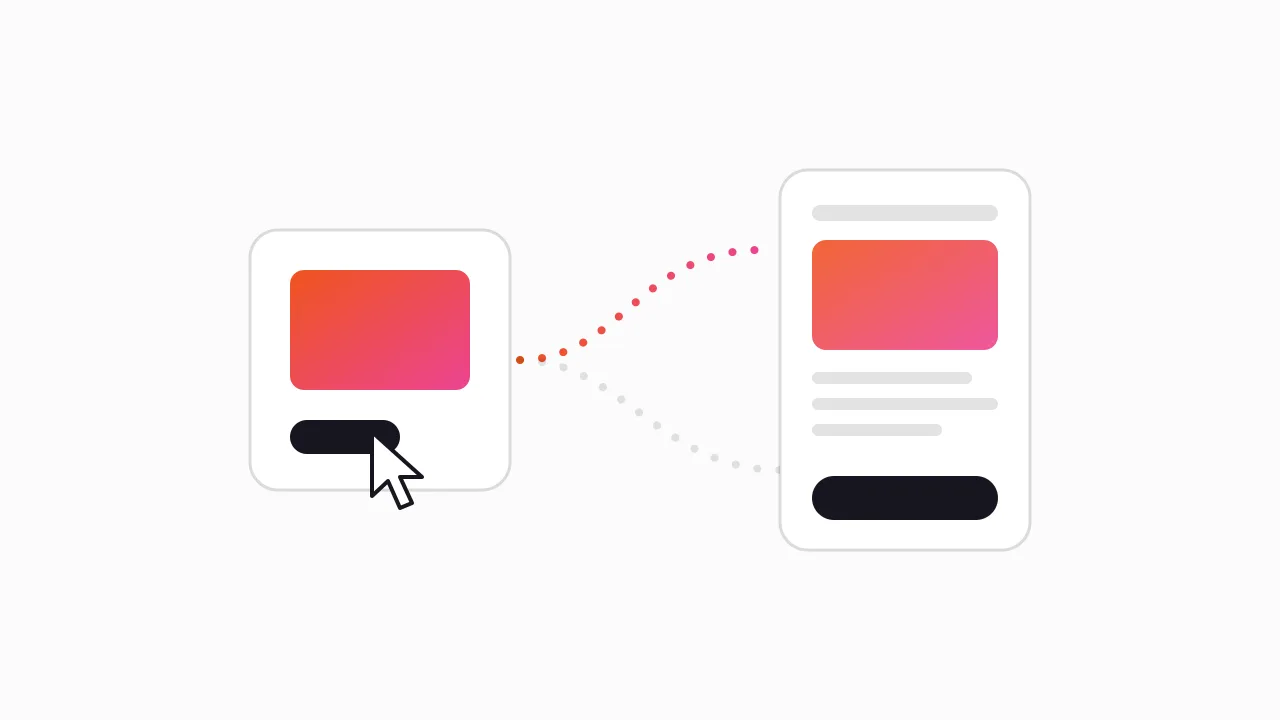
The Facebook traffic ad examples worth studying all do one thing well: they make the click feel like the natural next step, usually by promising something to read, take, try or find on the other side. A traffic ad is any ad in a campaign set to the Traffic objective, which tells Meta to send people to your site, app or another destination and optimize for link clicks or landing page views.
Below are nine traffic ad patterns I see in long-running ads, why most ecommerce buyers skip Traffic and run Sales, and how to find traffic-style ads in the Meta Ad Library.
What is a Facebook traffic ad?
Meta has six campaign objectives: Awareness, Traffic, Engagement, Leads, App promotion and Sales. Traffic sits near the top of the funnel. You pick a destination, such as a website, an app, a Messenger chat or a call, and Meta finds people likely to take that step.
For website traffic, the two settings most buyers choose between are link clicks and landing page views. Link clicks counts anyone who taps the link. Landing page views waits until the page actually loads, which filters out a lot of accidental taps and slow bounces. If I run Traffic for a website, I almost always pick landing page views.
The creative itself can be anything: image, video, carousel or slideshow. What makes it a traffic ad is the objective behind it, not how it looks. Our guide to Meta campaign objectives explains how each objective changes who sees the ad.
Why do many ecommerce brands run Sales instead of Traffic?
This is the most important point in the post, so I will say it early. If you sell products and you want purchases, Traffic is usually the wrong objective.
Traffic campaigns show a low cost per click, and that number is tempting. But cheap clicks are the easiest thing in the auction to buy. There are plenty of people who tap ads out of habit and never buy anything, and Traffic optimization finds them efficiently. You get a nice CPC and an empty Shopify dashboard.
Sales optimizes for purchases (or another conversion event you choose), so Meta looks for people who behave like buyers. For most stores with a working pixel, that is the better trade even though each click costs more.
So when do I use Traffic? When the click genuinely is the goal. Content I want people to read, a quiz that feeds a later offer, a local business site where the visit itself matters, or a brand-new account with literally no conversion data as a short bridge. For the purchase side, our conversion ad examples post covers the patterns that actually sell.
What are 9 Facebook traffic ad examples by pattern?
These are patterns, not specific brands' ads. I describe archetypes you can spot once you know the shape, then show how to find live versions yourself.
1. Blog or article content
A publisher, DTC brand or B2B company promotes an article: "The 7 mistakes people make when choosing a mattress." The creative is a clean image or short video, the headline is the article title, and the button usually says Learn More.
This is the most legitimate use of Traffic. The goal is a reader, and the brand retargets readers later with an offer.
2. Lead magnet landing page
A coach, agency or software company offers a free guide, checklist or template. The ad sends people to a landing page where they enter an email to get it.
Some advertisers run this on Traffic, others on Leads with a conversion event. The ad pattern looks the same: name the outcome, show the asset (a mockup of the guide cover is common), one clear CTA.
3. Quiz funnel
"Which skincare routine fits your skin type? Take the 60-second quiz." The ad promises a personal answer, and the landing page is a short quiz that ends with a product recommendation.
Quizzes earn clicks because people like learning about themselves. The smarter versions optimize for a quiz-completion event rather than raw clicks once they have enough volume.
4. Local business website
A dentist, gym, salon or restaurant sends nearby people to its site: menu, booking page, opening hours. The creative shows the place or the people, with a short line about what makes it worth a visit.
For local businesses the visit itself has value, and Traffic with a tight radius is often a simple, sensible starting point.
5. App store or app page
An app developer sends people to an app listing or a web page about the app. The creative shows the app in use, often a screen recording on a phone.
Most serious app advertisers move to the App promotion objective, which optimizes for installs, but simpler traffic-style app ads still show up, especially for web apps and tools.
6. Ecommerce collection page
A store promotes a whole collection rather than one product: "The new autumn collection is here." The landing page is a category page, not a product page.
This is where Traffic and Sales blur. The creative looks identical either way. I would still run it on Sales in most cases, for the reasons above, but you will see plenty of collection ads in the library and some are traffic-driven content plays around a launch.
7. Event page
A conference, concert, workshop or local market sends people to an event page or ticketing page. The creative leads with the date, place and headline act or speaker.
Event advertisers often use Traffic early to build awareness of the page, then switch to a conversion objective once ticket sales start tracking.
8. Free tool or calculator
A finance, real estate or SaaS brand promotes a free calculator: "See how much you could save by refinancing." The landing page is the tool itself, with a soft offer after the result.
This pattern works because the click delivers instant value, which makes the follow-up offer feel earned.
9. Video or webinar replay
A brand promotes a recorded talk, demo or webinar replay hosted on its own site. The ad is a short clip from the video with a "Watch the full session" line.
The goal is a viewer who spends time with the brand, and the follow-up comes through retargeting.
| Pattern | What the click delivers | Typical button | Common in |
|---|---|---|---|
| Blog content | An article | Learn More | Publishers, DTC, B2B |
| Lead magnet | A free guide or template | Download, Learn More | Coaches, agencies, SaaS |
| Quiz funnel | A personal answer | Learn More, Take Quiz style copy | Skincare, supplements, finance |
| Local business site | Menu, booking, hours | Learn More, Book Now | Restaurants, gyms, clinics |
| App page | An app listing | Learn More, Download | Apps, web tools |
| Collection page | A category of products | Shop Now | Apparel, home |
| Event page | Tickets or details | Learn More, Get Tickets style | Events, workshops |
| Free tool | An instant result | Learn More | Finance, property, SaaS |
| Webinar replay | A video to watch | Watch More, Learn More | B2B, education |
How do you find traffic ads in the Meta Ad Library?
The Meta Ad Library at facebook.com/ads/library shows every active ad from any advertiser, but it does not show which objective an ad uses. You have to read the clues.
Here is how I do it:
- Search a keyword or competitor and set the country. For content plays, search phrases like "free guide," "quiz," "calculator" or "read more."
- Look at the button on each ad. Learn More is the most common traffic-style CTA, though it is not proof on its own, since conversion ads use it too.
- Click through to the landing page. An article, quiz, tool or event page tells you far more about the funnel than the ad does. Our guide to finding competitor landing pages covers redirects and shortened links.
- Check the "Started running on" date. Advertisers stop paying for ads that do not work, so a traffic ad running for months is probably feeding a funnel that pays off later. More on that in Facebook ad longevity.
- Save the creative and note the landing page before the ad disappears.
For step 5, I use our free extension, which adds a Download button to every ad in the library and saves videos in original HD, images and full carousels. Every export includes a CSV of the ads, so I add a column for the landing page and the funnel type next to each one. Our pillar guide on downloading Facebook Ad Library videos covers other methods if you prefer something else.
What makes a Facebook traffic ad work?
Across the long-running ones, a few habits repeat.
The promise is specific. "Read our guide" gets ignored. "The 3 numbers to check before you refinance" gets clicked, because the viewer knows exactly what they will get.
The ad and the page match. If the ad promises a quiz, the first screen after the click is the quiz, not a homepage. Mismatched pages waste the click you just paid for, and with landing page views optimization they also confuse the system.
The ad sells the click, not the product. A traffic ad that tries to close the sale in the feed is usually doing the wrong job. Its job is to get the right person to the next step.
And there is a plan after the click. The advertisers who keep traffic ads running for months are almost always retargeting those visitors with a conversion offer. Traffic on its own rarely pays the bills.
FAQ
What is a Facebook traffic ad?
A Facebook traffic ad is an ad in a campaign using the Traffic objective, which tells Meta to send people to a destination such as a website or app. For websites it usually optimizes for link clicks or landing page views rather than purchases.
Should I use Traffic or Sales for ecommerce?
For most stores that want purchases, Sales is the better choice. Traffic finds people who click cheaply, while Sales looks for people who behave like buyers, so the cost per click is higher but the clicks are worth more.
How do I find traffic ads in the Meta Ad Library?
The library does not label objectives, so look for clues: Learn More style buttons, and landing pages that are articles, quizzes, tools or event pages. Then check the "Started running on" date to see which ones have lasted.
What is the difference between link clicks and landing page views?
Link clicks counts anyone who taps the link, even if they leave before the page loads. Landing page views only counts people whose page actually loaded, so it usually brings fewer but better visitors.
What makes a good Facebook traffic ad?
A specific promise, a landing page that matches the ad exactly, and a clear plan to retarget visitors afterwards. The ad should sell the click and leave the selling of the product to the page and the follow-up.
The Klipio extension adds a download button to every ad in the Meta Ad Library: one click per ad, or bulk-save a whole search as a ZIP with a searchable swipe file inside. Free, no sign-up.
Get the free Ad Library downloaderKlipio reads a competitor's live Meta ads, ranks them by how long they have been running — the honest signal that an ad is profitable — and turns the winning angle into on-brand creative for your own brand. 3-day free trial.
Start free — 3-day trial →